Why did Japan gamble on a surprise attack at Pearl Harbor?
Radar actually spotted the incoming planes that morning. The officer who got the call assumed it was a routine flight from California.
▶ Start the storyJapan attacked Pearl Harbor to win a short war, not to fight a long one with the United States. Japan was at war in China and had occupied French Indochina. In response, the US and its allies cut off oil and other materials Japan's war needed. Japan faced a choice: pull out of China, or seize raw materials in Southeast Asia's European colonies. Admiral Isoroku Yamamoto's plan was to knock out the US Pacific Fleet in one blow. Japan could then grab territory fast and negotiate peace.
The surprise almost failed. On the morning of 7 December 1941, a US Army radar station at Opana Point picked up the first wave of Japanese planes. The operators had never seen such a large formation. But the officer who took their call was new, and his center was short of staff. Six American B-17 bombers were due from California on almost the same bearing. He assumed that was what the radar saw. The operators never told him how big the formation was.
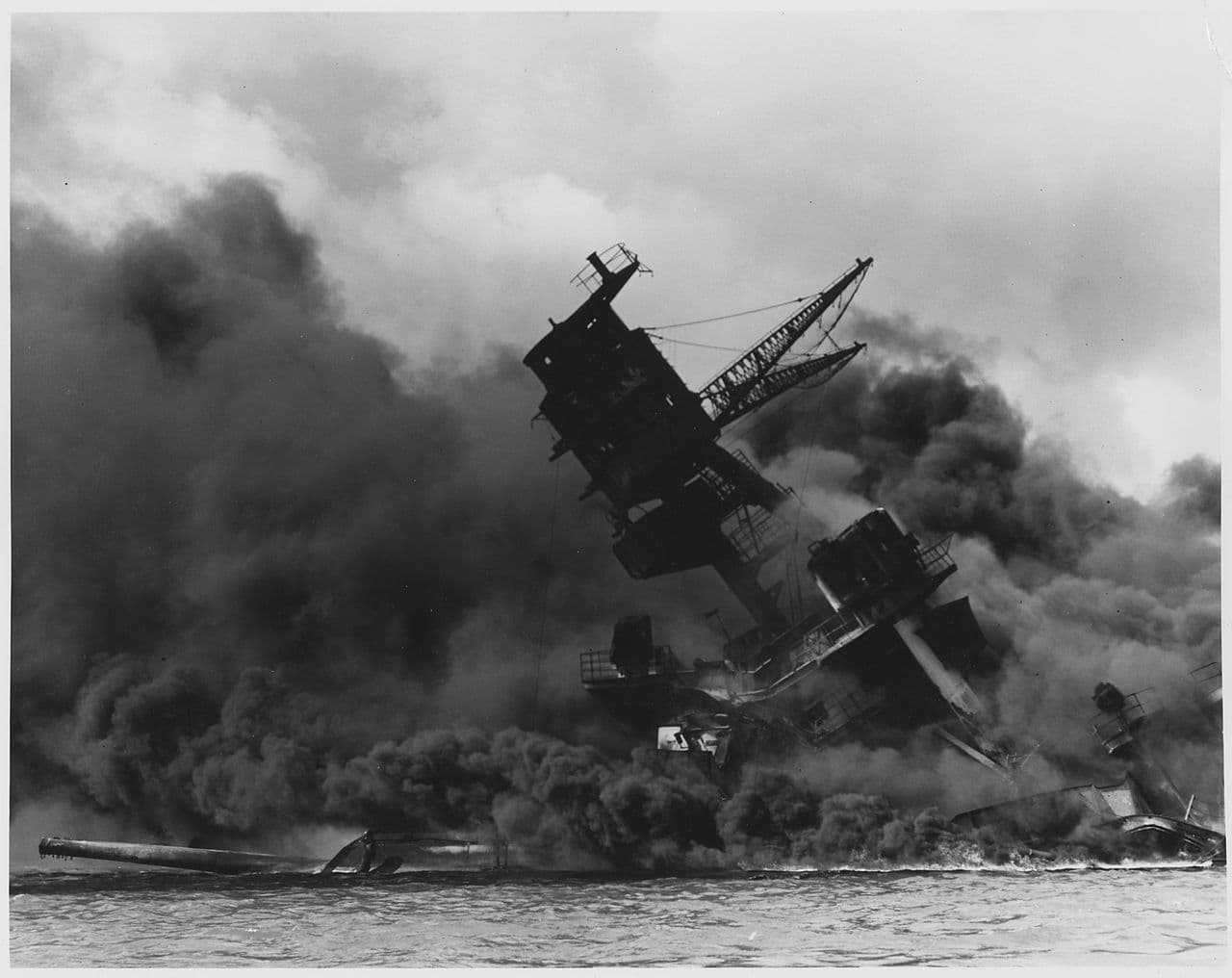
At 7:48 a.m., 353 Japanese aircraft from six carriers struck in two waves. All eight battleships present were damaged, and four sank. More than 180 US aircraft were destroyed. In all, 2,403 Americans were killed. Japan lost 29 planes. Yet the fleet's three aircraft carriers were out at sea, and the base's oil tanks and repair yards were never targeted.
Destroyed or damaged
- All 8 battleships present (4 sunk)
- More than 180 aircraft
- 3 cruisers, 3 destroyers, a minelayer and more
Left untouched
- All 3 Pacific Fleet aircraft carriers (at sea)
- Oil storage tanks
- Ship-repair facilities
The attack backfired. The US, neutral until then, declared war on Japan the next day. On 11 December, Germany and Italy declared war on the United States too, though their pact with Japan did not require it. Japan had hoped for a quick, limited war. It now faced the United States across the Pacific, in a war that had become truly global.
Quiz me
0/3
Recap
Japan attacked to buy time and resources for a short war, but the strike instead triggered the long, global one it was meant to avoid.
Surprising fact · Radar actually detected the incoming attack, but the warning was dismissed as an expected flight of American bombers.
Sources (2)
No source, no claim. Every fact in this lesson (14 claims) cites at least one of these.